.svg)
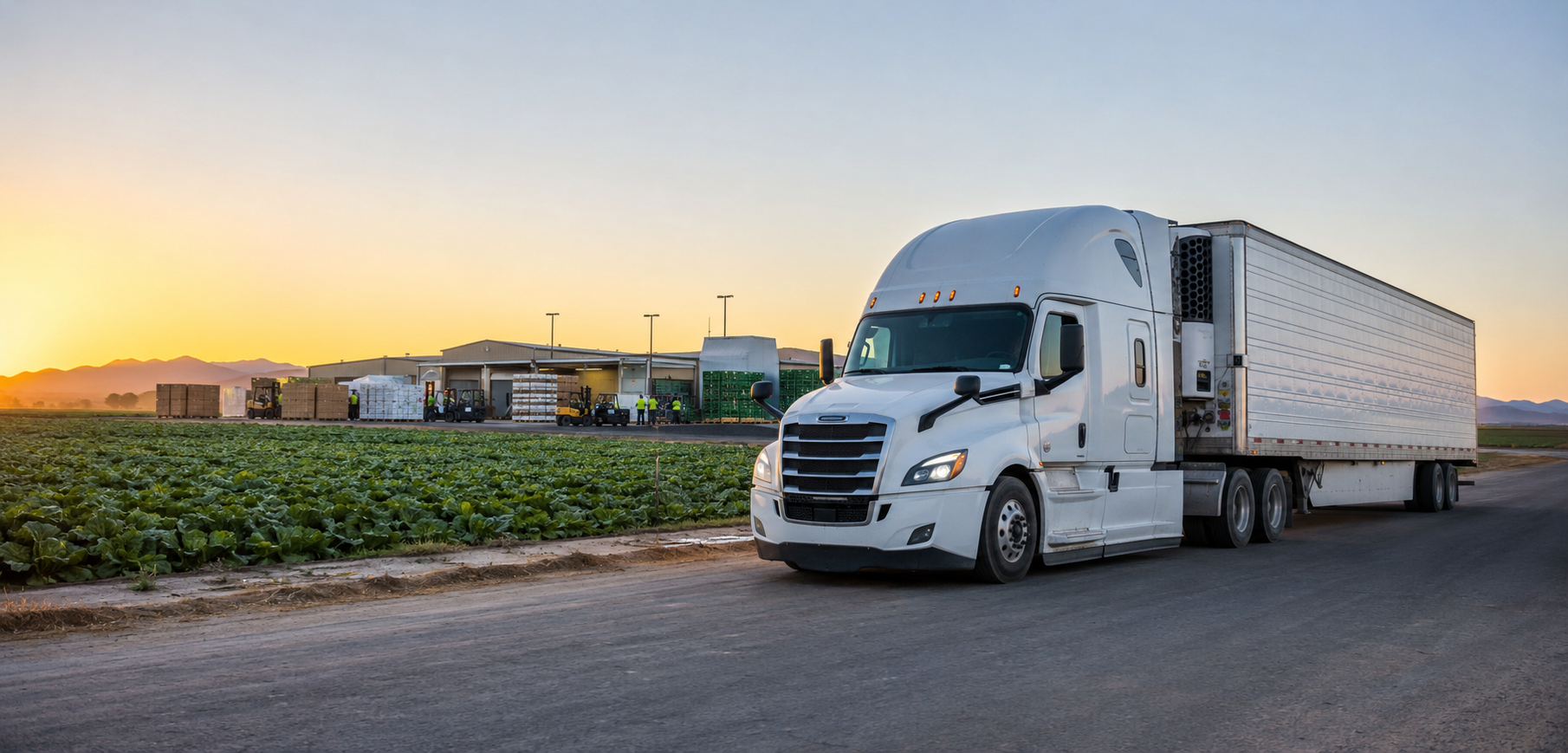
By January the Yuma harvest runs on a fixed clock. Romaine cut in the morning gets cooled the same afternoon and is due on a receiver's dock two time zones away inside an appointment window that does not move.
All of that depends on a truck with a qualified driver in it, and that pool has changed three times since late 2024. Those rules got plenty of coverage on their own. What got less attention is what they add up to for one county in Arizona across five months. Which raises a question worth asking before November: are there enough drivers to haul this year's harvest?
-
01
Yuma supplies roughly 90% of America's leafy greens from November through March.
-
02
Over 202,000 drivers sit in Clearinghouse prohibited status, and nearly 79% have not started coming back.
-
03
Last season Yuma peaked at a 40-to-1 load-to-truck ratio, with reefer capacity 120% tighter than the year before.
-
04
Arizona licensing trends are a weaker proxy for Yuma truck availability than they look.
Why does Yuma need so many drivers at once?
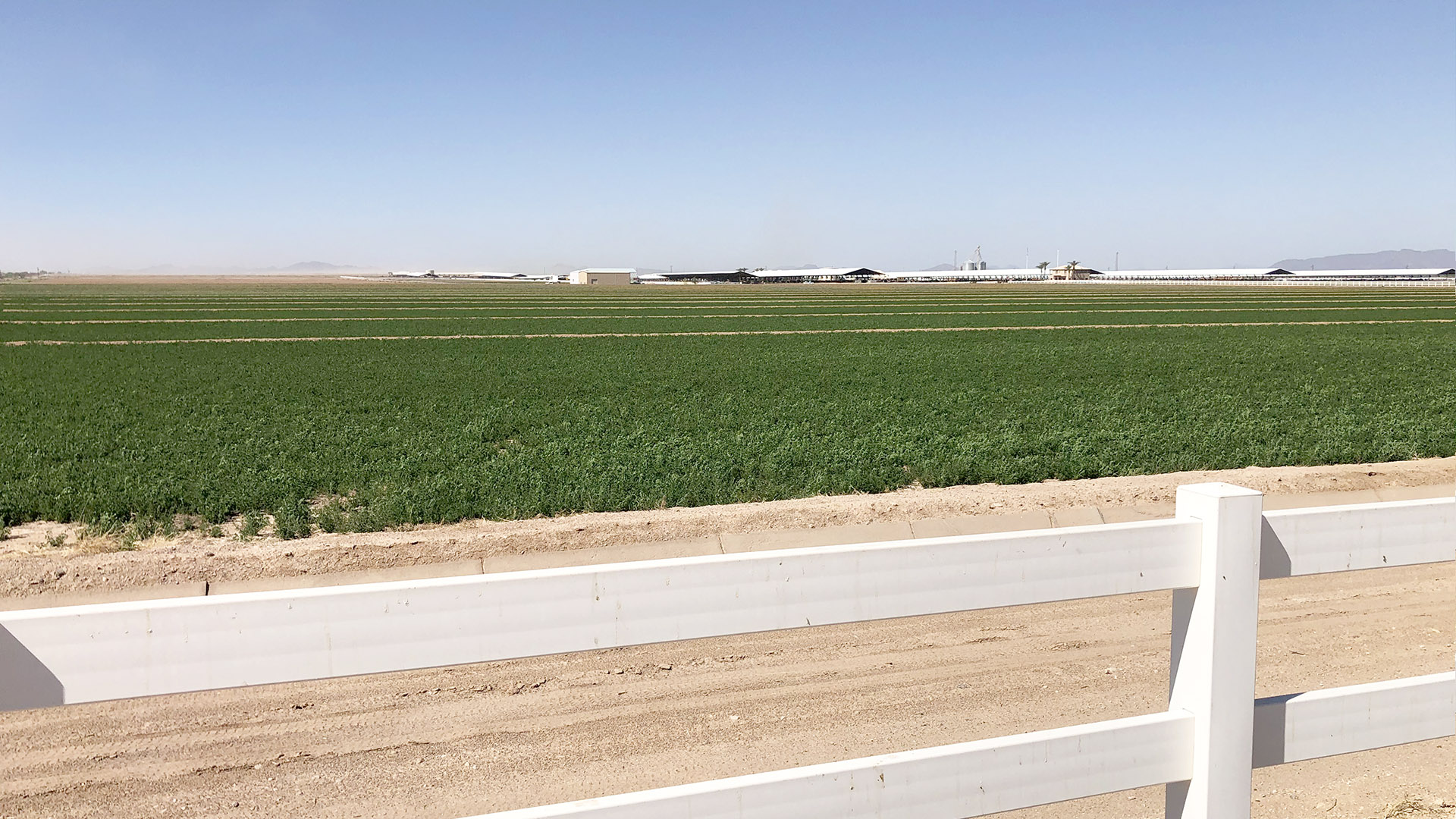
Yuma County grows more than 175 crops and supplies roughly 90% of the country's leafy greens between November and March.
The demand is also narrower than the volume suggests. Produce freight needs reefer-qualified drivers who know that a trailer pre-cooled wrong can cost the whole load, and who will run five days east and still make a 4 a.m. appointment. That is a much smaller group than the total CDL count suggests.
What is changing in the driver pipeline?
Three federal changes have hit the licensed driver pool since late 2024. Two of them remove drivers and one adds them.
202,345 drivers in prohibited status as of January 2026
~200,000 holders affected, 30,000 to 40,000 exits per year
$1.87M ADOT grant covering test sites including Yuma
What is a CDL downgrade?
State licensing agencies now have to check the federal drug and alcohol Clearinghouse and downgrade any driver in prohibited status. That population reached 202,345 in January, up from roughly 190,000 six months earlier, and nearly 79% had not begun the return-to-duty process.
That figure does not behave like a market cycle. Getting a license back requires a professional assessment, a negative test, and a follow-up testing plan, and four out of five have not started step one.
The 202,345 CDL holders in Clearinghouse prohibited status, by where they stand in the return-to-duty process. January 2026.
Does the non-domiciled CDL rule affect produce freight?
It does, though gradually. Eligibility is now limited to H-2A, H-2B, and E-2 visa holders, and FMCSA expects about 97% of current holders will not qualify at renewal. That drains the pool over years rather than all at once, and it drains it unevenly.
West Coast reefer has long leaned on owner-operators and small fleets, many of them immigrant-owned, because larger carriers tend to avoid the claims and rejection risk that comes with produce. A national licensing rule therefore falls hardest on the segment Yuma depends on most. The rule is under appeal, with argument in the D.C. Circuit on September 15.
Is CDL testing access improving in Arizona?
This is the one change running the other direction. The ADOT grant covers rural test sites including Yuma, so fewer candidates have to drive to Phoenix or Tucson to get licensed. It will not offset the first two, though it is the only change here that adds drivers.

Do fewer Arizona CDLs mean fewer Yuma trucks?
Not necessarily, and this is where the licensing data gets over-read.
Yuma does not run on Arizona licenses. Many of the trucks pulling out of Yuma coolers in January are driven by people licensed wherever their carrier is domiciled. Holding a CDL is also not the same as driving reefer, which most CDL holders never do.
In a tight week the constraint is usually position rather than licensing. That is also why the federal changes carry more weight than the state numbers: they apply nationally, regardless of where a driver got licensed.
What does last season tell us about this one?
We watched Yuma hit a 40-to-1 load-to-truck ratio on March 14, which means forty loads chasing every truck posted. At that spread, rate stops working as a lever, because the shortage is physical rather than economic and you cannot outbid a truck that is not there.
Reefer capacity was running 120% tighter than the same stretch a year earlier, and cost pressure was coming from every direction. Diesel climbed fast enough that carriers repriced mid-season, and lanes across the wider Southwest ran well above the year before. Underneath both, and harder to price, there was most likely some lingering caution about immigration enforcement near the border, which kept capacity from repositioning into the region.
All of that landed on a driver pool that was already thinner, and nothing since has widened it, so this season starts from a lower floor. That is not a forecast of another 40-to-1, but Yuma's load-to-truck ratios over the first two weeks of November will show it early, which is the difference between planning capacity in September and discovering the gap in February.
- FMCSA Drug and Alcohol Clearinghouse. Prohibited-status counts and return-to-duty data. See also CDL downgrade requirements.
- FMCSA, Non-Domiciled CDL 2026 Final Rule FAQs. Effective date, eligible visa categories, and credential requirements.
- Arizona Department of Transportation. The $1.87 million federal grant to upgrade CDL test sites, including Yuma.
- Library of Congress and Arizona Farm Bureau. Yuma County crop counts and its share of national winter leafy green production.