.svg)
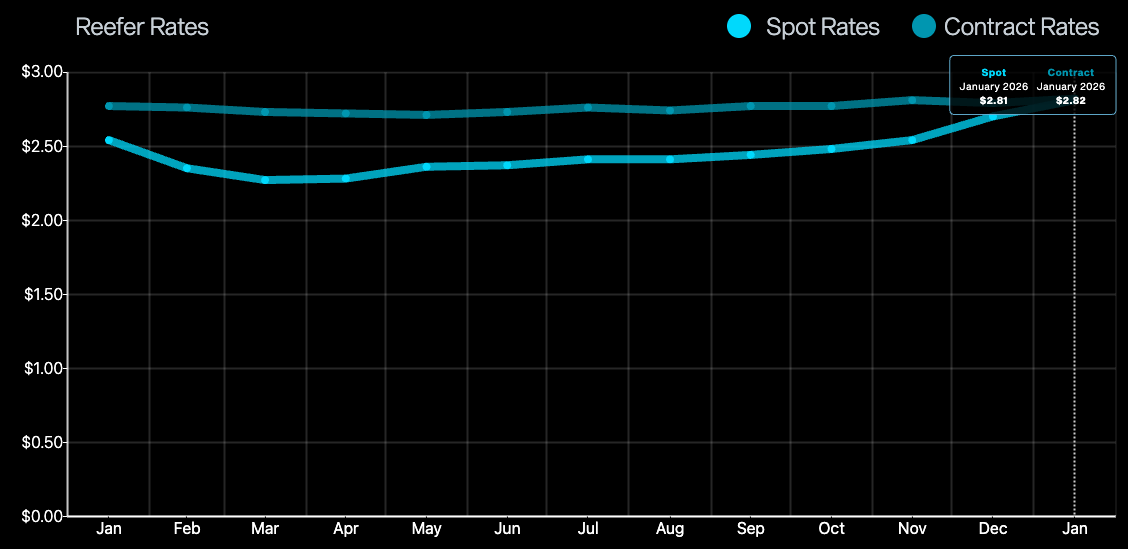
In temperature controlled freight, “spot vs contract” is rarely just a pricing decision. It is a decision about execution risk. When the spread is wide, spot flexibility can be justified. When the spread compresses, the upside fades quickly, but the downside stays the same: missed pickups, bounced tenders, late appointments, and higher exposure to product and receiver fallout.
That is exactly what your DAT chart is showing right now. In January 2026, spot reefer sits at $2.81 per mile and contract reefer sits at $2.82 per mile. That is effectively parity, with only about a penny separating the two. The story is not just the number. It is the direction. Spot rates climbed steadily off the spring lows and closed the gap into winter, while contract remained comparatively stable and slightly higher most of the year.
Core reasons the spread tightens in reefer
- Seasonality concentrates demand in specific origin pockets, which tightens capacity regionally before it shows up nationally.
- Weather and disruption reposition networks, stranding equipment and compressing lead times.
- Receiver dwell reduces effective capacity, because fewer turns per week means fewer available trucks even if the market “looks” supplied.
- Costs set a firmer floor, making carriers less flexible on marginal loads when conditions tighten.
The practical takeaway for shippers is simple. When spot is near contract, waiting does not create meaningful savings, it creates risk. The better move is to protect service on the lanes where failure hurts most, and run tighter fundamentals so your freight is easier to accept: clear pickup windows, confirmed appointments, precise temperature requirements, and true load readiness. That is how Fresh Freight thinks about the spot vs contract conversation when the spread compresses.